
BJP MP Raghav Chadha addressed the 12th IPU Global Conference of Young Parliamentarians in Samarkand, Uzbekistan, highlighting India's digital transformation journey. He emphasised how technology is widening access and promoting inclusion, citing UPI's success, affordable data, and robust data protection laws. Chadha also discussed India's digital cooperation with Uzbekistan and the importance of digital rights, safety, and skill development for all citizens.

Trai Chairman Anil Kumar Lahoti highlighted the transformative role of satellite communications in expanding seamless connectivity across India, especially in remote areas. He noted that India's space economy is projected to grow significantly, driven by satcom technology that will bridge the digital divide, provide resilient infrastructure during disasters, and support strategic sectors.
Trai Chairman Anil Kumar Lahoti highlighted the transformative role of satellite communications in expanding seamless connectivity across India, especially in remote areas. He noted that India's space economy is projected to grow significantly, driven by satcom technology that will bridge the digital divide, provide resilient infrastructure during disasters, and support strategic sectors.

Prime Minister Narendra Modi celebrated the Unified Payments Interface (UPI) completing a decade, calling it a major turning point in India's digital payment journey. Launched in 2016, UPI has become the backbone of India's digital payments ecosystem, showing exponential growth in transaction volume and value, and is a key pillar of the Digital Public Infrastructure.

Union Home Minister Amit Shah lauded UPI on its 10th anniversary, highlighting its role in India's digital transformation. Launched by NPCI in 2016, UPI has become the world's largest real-time payment system, witnessing a massive surge in transaction volume and value, demonstrating its success in empowering people with swift, seamless, and secure digital transactions.

The Unified Payments Interface (UPI) has completed a decade since its launch, becoming the backbone of India's digital payments ecosystem. It has seen exponential growth in transaction volume and value, expanding financial inclusion and setting a global benchmark for real-time payments.

The Maharashtra government has approved the deployment of sovereign artificial intelligence solutions from Sarvam AI for its departments, with a two-year outlay of Rs 11.26 crore. This initiative includes the Indus AI workspace for 2,500 users, ensuring government data remains within India, along with citizen outreach agents and speech models for the MahaAI platform.

Chief Secretary Atal Dulloo announced that the Census 2027 will be a fully digital and paperless exercise, utilising mobile technology, AI, and cloud computing for accuracy and efficiency, marking a shift towards data-driven governance.

Life Insurance Corporation (LIC) has launched two new mobile applications, MyLIC for policyholders and Super Sales Saathi for its sales intermediaries, aiming to enhance digital agility and cater to the younger generation's needs. The apps, part of LIC's DIVE digital transformation platform, offer features like policy management, premium payments, and personalised recommendations.

Microsoft has launched its fourth cloud region in India, located in Hyderabad, significantly expanding its hyperscale cloud presence. This move is part of a USD 20.5-billion investment in India's digital and AI infrastructure, aiming to support the country's rapid digital growth and meet increasing demand from major enterprises.

The All India Tennis Association (AITA) has launched a new digital platform in partnership with World Tennis Number, creating a unified ecosystem for Indian tennis. This platform will streamline registrations, tournament entries, and provide access to rankings, aiming to modernise the sport's administration and player experience.

A NITI Aayog report indicates that India's digital public infrastructure (DPI) initiatives are projected to contribute significantly to the nation's GDP, potentially reaching 4 per cent by 2030.
A NITI Aayog report indicates that India's digital public infrastructure (DPI) initiatives could contribute 4 per cent of the GDP by 2030, a significant increase from the current 1 per cent.

Telecom industry body COAI and the British High Commission signed an MoU to boost cooperation in AI, connectivity, and digital trust, fostering responsible tech innovation. The pact, signed at the CO.AI 2026 event, focused on AI's role in intelligent networks, security, and public services. Discussions highlighted AI's importance in combating fraud, improving network efficiency, and ensuring secure digital services. TRAI Chairman Anil Kumar Lahoti and Acting British High Commissioner Ben Mellor emphasised the need for balanced governance and international collaboration to ensure secure, inclusive, and responsible digital transformation.
India's MSME sector faces a significant formal credit gap of approximately Rs 60 lakh crore, with traditional channels meeting only a fraction of the demand. A new report suggests that a centralised, interoperable digital layer could effectively bridge this gap and enhance productivity across the formal business sector by digitising workflows and enabling cash-flow-based underwriting.

Prime Minister Narendra Modi celebrated 11 years of the Digital India initiative, highlighting its role in redefining governance, empowering citizens, and accelerating all-round development. He emphasised its impact on digital payments, direct benefit transfers, and expanding digital public infrastructure, making technology a powerful instrument for 'Ease of Living' across India, including tier-2 and tier-3 cities.

A new report indicates India has become the world's fifth most digitalised economy and ranks fourth globally in AI performance, driven by increasing AI adoption and a strong digital infrastructure.
Union Minister Jitendra Singh stated that human-led artificial intelligence will be the defining force in India's journey to becoming a developed nation by 2047. Speaking at the 29th National Conference on e-Governance, he emphasised that technology must strengthen governance without replacing human accountability, advocating for responsible AI deployment with citizens at the centre. The conference concluded with the adoption of the Jaipur Declaration on e-Governance 2026, outlining a roadmap for AI-enabled, data-driven, and secure digital governance.
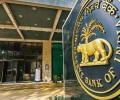
The Reserve Bank of India (RBI) is planning to extend tokenisation to various financial asset classes, building on its successful trials with certificates of deposit (CDs). This move aims to enhance the efficiency of issuance, trading, and settlement of financial assets, leveraging blockchain technology and wholesale Central Bank Digital Currency (CBDC) for atomic settlements.

TRAI Chairman Anil Kumar Lahoti highlights the increasing importance of Artificial Intelligence in the design, management, and experience of telecom networks in India, noting its role in self-optimising networks, cybersecurity, and preparing for 6G technology.

State-owned Life Insurance Corporation (LIC) announced on Monday that it had signed up tech giant Infosys to develop a next-generation digital platform that will act as the foundation for new high-value business applications, such as customer and sales super apps, portals, and digital branches. The financial terms of the deal remain undisclosed. The tie-up with Infosys is part of LIC's "long-drawn" strategy, said a senior executive of India's biggest insurer, who noted that the IT giant "won the bid to develop the next-generation platform through a request for proposal (RFP) process".

The BRICS New Delhi Declaration has endorsed India's proposals for a Working Group on Sports Technology and a Sports Goods Manufacturing Conclave, aiming to enhance cooperation and innovation among member nations in the sports sector.
Industry body Assocham has welcomed the new UPI framework for large-value merchant transactions, effective October 15. This framework introduces a 0.4 per cent Merchant Discount Rate (MDR) on person-to-merchant UPI payments exceeding Rs 2,000, with a cap of Rs 300 for transactions over Rs 75,000. The move aims to enhance UPI sustainability, support innovation, and mitigate fraud, while protecting small merchants and ensuring most everyday transactions remain free.

Delhi LG Taranjit Singh Sandhu addressed the Global Confluence 2026, emphasising the importance of maintaining a human element at the heart of digital nation-building. He highlighted India's digital transformation and the role of technology in improving lives, while urging a focus on inclusive development and national security.

N Chandrasekaran, chairman of Tata Consumer Products (TCPL), stated that India continues to experience credible economic growth, driven by strong demographic fundamentals and accelerating digital public infrastructure, despite a fragmented global landscape.

India's Unified Payments Interface (UPI) recorded an unprecedented 24.51 billion transactions valued at Rs 29.8 lakh crore in August, largely propelled by the Raksha Bandhan festival. This surge marks a 22% annual increase in volume and 20% in value, highlighting the expanding reach and depth of the UPI ecosystem. Experts anticipate further growth during the upcoming festive season, while UPI's international acceptance now spans 11 countries.

A report by Bain & Company and HealthQuad identifies remote patient monitoring, OT/ICU optimisation, and chronic disease management as key opportunities for Artificial Intelligence in Indian healthcare. The report highlights a shift from experimental AI to real-world applications, driven by government initiatives, increasing EMR adoption, and a robust startup ecosystem. AI's autonomous capabilities are rapidly advancing while costs decrease, creating significant growth potential for providers and startups.
The Reserve Bank of India (RBI) has endorsed the introduction of a Merchant Discount Rate (MDR) on UPI transactions exceeding Rs 2,000, effective October 15. This move, which levies a 0.4 per cent fee on merchant payments above the threshold, aims to bolster the long-term sustainability and growth of India's digital payments ecosystem. The RBI clarified that person-to-person (P2P) transactions and small person-to-merchant (P2M) payments below Rs 2,000 will remain free for users, ensuring no direct charge on customers.
A three-day 'AI Champions for Digital Governance' programme has commenced in New Delhi, hosted by ITDC, SCOPE, and LBSNAA. The initiative aims to train senior leadership and operational teams in applying artificial intelligence within public sector organisations, aligning with the IndiaAI Mission. Experts highlighted AI's role in improving efficiency, productivity, and public service delivery, while also emphasising responsible adoption and data quality. The programme seeks to build an AI-ready nation and contribute to India's vision of future-ready governance systems.
A three-day 'AI Champions for Digital Governance' programme has commenced in New Delhi, hosted by ITDC, SCOPE, and LBSNAA. The initiative aims to train senior leadership and operational teams in applying artificial intelligence within public sector organisations, aligning with the IndiaAI Mission. Experts highlighted AI's role in improving efficiency, productivity, and public service delivery, while also emphasising responsible adoption and data quality. The programme seeks to build an AI-ready nation and contribute to India's vision of future-ready governance systems.
The Indian government has mandated that banks and payment providers cannot levy charges on UPI transactions up to Rs 2,000 or on payments made via RuPay debit cards. This directive follows an amendment to the Payment and Settlement Systems Act, 2007, aiming to sustain and expand the digital payments ecosystem.

Digital money is gradually starting to behave like software. It's no longer inert -- sitting passively in accounts. In the not-so-distant future, your money could become 'smart' and 'active,' understanding your preferences, paying your bills automatically, optimising your returns, and managing your risks -- all without you having to manage the details.

Experts at the Mosambi Climate Conference (MC2) emphasized the importance of incorporating digital architecture into the energy ecosystem for achieving significant climate transformation.
Andhra Pradesh and Punjab National Bank (PNB) have signed an MoU to establish the PNB Quantum Finance Hub at Amaravati Quantum Valley. This initiative aims to foster innovation and adopt next-generation technologies like AI and Quantum Computing in the banking sector, focusing on cybersecurity, fraud detection, and customer experience.

Chief Economic Advisor V Anantha Nageswaran highlights the challenges of digital access, data governance, interoperability, and cyber security in India's digital public infrastructure (DPI), despite its world-class scale.

LIC is the only brand in the Brand Finance India 100 2026 report that has a top five rank in both brand value and brand strength.
The digital transformation should not be confined to a small part of the "human race" and its greater benefits will be realised only when digital access becomes "truly inclusive", Prime Minister Narendra Modi said at the G-20 summit on Wednesday. Modi also strongly pitched for a pledge by the G-20 leaders to work for bringing digital transformation into the life of every human being in the next 10 years so that no person is deprived of the benefits of the new technologies. In a session on digital transformation, the prime minister also said that principle of "data for development" will be an integral part of the overall theme of India's upcoming G-20 Presidency.

TRAI Chairman Anil Kumar Lahoti has called for robust safeguards, human oversight, and intervention capabilities as Artificial Intelligence becomes increasingly integrated into telecom networks. While acknowledging AI's potential to transform network management and threat detection, Lahoti stressed the need for responsible AI deployment, risk assessments, and clear accountability to ensure consumer trust and prevent misuse, especially in combating online fraud.

A high-level committee, including representatives from banks and payment associations, is set to decide on Merchant Discount Rate (MDR) for UPI transactions exceeding Rs 2,000 to merchants. While person-to-person and person-to-merchant transactions up to Rs 2,000 remain free, the move follows a recent amendment to the Payment and Settlement Systems Act, sparking debate and clarification from the Finance Minister that only certain high-value merchant transactions might incur charges.

The CEO of the National Health Authority, Sunil Kumar Barnwal, highlighted BRICS nations' shared aspiration for connected, patient-centric, and resilient healthcare systems through digital health infrastructure and responsible AI. Discussions at the 16th BRICS Health Ministers' meeting focused on overcoming challenges like limited interoperability and workforce constraints, with countries like Brazil and Indonesia sharing successful digital health initiatives.
